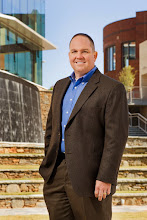
The National Steering Committee for the Concrete Industry Management (CIM) program raised $300,000 at its fourth annual auction, held in conjunction with the World of Concrete on Thursday, Feb. 5. According to Wally Johnson of US Concrete Products, the 2009 CIM Auction Chairman, “The money raised will benefit the CIM National Steering Committee and support the current CIM as well as help fund future program expansion.”Support for the event was provided by the World of Concrete (WOC) Show Management, Hanley Wood Publications, McNeilus Companies, Inc. and Ritchie Bros. Auctioneers.Thursday, February 12, 2009
CIM Raises $300,000 at Fourth Annual Auction
The National Steering Committee for the Concrete Industry Management (CIM) program raised $300,000 at its fourth annual auction, held in conjunction with the World of Concrete on Thursday, Feb. 5. According to Wally Johnson of US Concrete Products, the 2009 CIM Auction Chairman, “The money raised will benefit the CIM National Steering Committee and support the current CIM as well as help fund future program expansion.”Support for the event was provided by the World of Concrete (WOC) Show Management, Hanley Wood Publications, McNeilus Companies, Inc. and Ritchie Bros. Auctioneers.Show Attendance Down
Wednesday, February 4, 2009
Kitchen Sink Strategy
According to an article in the Wall Street Journal, state and city officials are seeking to add a variety of projects which includes everything, including the "kitchen sink." The article cites the U. S. Council of Mayors "Wish List" includes 18,750 projects.ACEC-NY Launches Campaign to Promote Engineering as a Career
Launching its first statewide image advertising campaign this month to coincide with the celebration of National Engineers Week, Feb. 15-21, the American Council of Engineering Companies of New York (ACEC New York) is sponsoring a message to promote the engineering profession to government agencies, policy makers, students, parents, academics and the general public. Half-page ads will run in regional and trade publications throughout New York State, with posters and billboards layered on in select markets. Responding to a 2008 report from the National Academy of Engineering (NAE), Changing the Conversation: Messages for Improving Public Understanding of Engineering, ACEC New York’s new “Vision” campaign communicates positive aspects of the engineering profession—creativity, innovation and forward thinking—that have long been ignored or misunderstood by the public.Developed by Englewood Cliffs, N.J.-based marketing and public relations firm Reichman Frankle Inc., the ad focuses on the inspirational nature of engineering by combining an oversized photo of a young person in a hard hat gazing through binoculars that reflect back images of an idealized built environment and a satellite view of the earth with the headline, “Your Vision Can Change the World.” The copy reinforces the message that engineering requires creativity, imagination, and vision, and provides examples of the kinds of cutting edge projects engineers are involved in, such as green buildings and state-of-the-art bridge design. “The goal of our new ad campaign is to get the general public excited about engineering, to interest young people in the profession and to communicate to policy makers and the public the intrinsic value of the profession to society’s well being,” said Hannah O’Grady, deputy executive director of ACEC New York. “Engineers’ work is essential to meeting the great challenges of our times—global competition, technological literacy and a sustainable planet. Greater understanding of the inventive role of the engineer should rightly enhance the perception of the profession and its essential, and often overlooked, contribution to our quality of life.”
“Consulting Engineering—A Career that Matters” is a new flash movie presentation to raise awareness of the profession among students at the college level. Produced as a CD-ROM, this 8-minute movie features video clips of young engineers describing their work across the various engineering disciplines and incorporates real project photos. The video is available at the ACEC NY website.
Source: ACEC New York -- Consulting-Specifying Engineer, 2/4/2009
Concrete Industry Management to Hold Auction
The 2009 Concrete Industry Management (CIM) Fundraising Auction is scheduled for Thursday, February 5 at World of Concrete® at the Las Vegas Convention Center. The event will feature a silent auction from 11 am – 1 pm, with the live auction following promptly at 1 pm.The 2009 CIM Auction will benefit the efforts of the CIM National Steering Committee (NSC) in support of the CIM Programs at Middle Tennessee State University, Arizona State University, New Jersey Institute of Technology, California State University – Chico and Texas State University – San Marcos.
BID ONLINE!Can’t make it to the auction? Real-time bidding is available over the internet using the Ritchie Bros. online bidding service, “rbauctionBid-Live.” Visit rbauction.com to register.
Wednesday, January 28, 2009
America's Infrastructure Fails According to ASCE


"Crumbling infrastructure has a direct impact on our personal and economic health, and the nation's infrastructure crisis is endangering our future prosperity," said ASCE president D. Wayne Klotz, P.E., F.ASCE. "Our leaders are looking for solutions to the nation's current economic crisis. Not only could investment in these critical foundations have a positive impact, but if done responsibly, it would also provide tangible benefits to the American people, such as reduced traffic congestion, improved air quality, clean and abundant water supplies and protection against natural hazards."
-Aviation = D (down from a D+)
-Bridges = C (no change)
-Dams = D (no change)
-Drinking Water = D- (no change)
-Energy = D+ (up from a D)
-Hazardous Waste = D (no change)
-Inland Waterways = D (no change, previous listed a Navigable Waterways)
-Levees = D- (new category)
-Public Parks and Recreation = C- (no change)
-Rail = C- (no change)
-Roads = D- (down from D)
-Schools = D (no change)
-Solid Waste = C+ (no change)
-Transit = D (down from D+)
-Wastewater = D- (no change)
The Report Card also offers five key solutions for raising the nation's infrastructure GPA. These include:
-Increasing federal leadership in infrastructure,
-Promoting sustainability and resilience,
-Developing federal, state and regional infrastructure plans,
-Addressing life-cycle costs and ongoing maintenance and
I-ncreasing and improving infrastructure investment from all stakeholders.
Each category was evaluated on the basis of capacity, condition, funding, future need, operation and maintenance, public safety and resilience. A detailed report, which accompanies the grades released today, will be released on March 25, 2009. For more information, including solutions for solving America's infrastructure problems and ASCE's Principles for Economic Stimulus Investment, visit www.asce.org/reportcard.
ASCE Issues Guidelines For Stimulus Investment
American Society of Civil Engineers’ principles will help ensure that investments aremade wisely and create long-standing benefits
Reston, Va.—The American Society of Civil Engineers (ASCE) has released their recommended ‘Principles for Infrastructure Stimulus Investment’ designed to help guide lawmakers and the Obama administration when allocating economic stimulus funding for infrastructure projects poised to aid in rebuilding the nation’s economy. ASCE is encouraged by last week’s introduction of the American Recovery and Reinvestment Bill of 2009, which highlights a shared focus on accountability and infrastructure investment. This investment is expected to create and sustain jobs, and begin to address the nation’s crumbling infrastructure if appropriately applied to areas that most require federal support.America’s infrastructure is in dire need of proper, sustained attention, as evident by the grade of “D” in ASCE’s 2005 Report Card for America’s Infrastructure. On January 28, ASCE will release its 2009 Report Card, and early indications are that little improvement has been made in the past four years. Infrastructure-related economic stimulus investments can reduce congestion and delays on America’s roadways; enhance public transit systems; reduce blackouts, brownouts and service interruptions; update the nation’s aviation system; and replace leaking water pipes. Careful consideration must be made in the selection of projects—both in stimulus and long-term legislative solutions—to ensure that appropriated funds for infrastructure investment produce desirable results.“The House bill is an encouraging indicator that Congress shares ASCE’s recognition of the need for both infrastructure investment and strict accountability for the use of federal money in this volatile economy,” said D. Wayne Klotz, P.E., F.ASCE, ASCE president.In order to guide the process of allocating funds to these important projects, ASCE has compiled guiding principles which will help steer investment in the right direction by keeping the focus on rehabilitating worn-out infrastructure to increase safety and building new infrastructure to keep the nation competitive in the global economy.
Among these principles, ASCE believes that all projects supported by an economic stimulus investment must meet the following fundamental criteria:
Projects must create and sustain employment increases;
Investments must provide long-term benefits to the public (such as congestion relief);
Long-term maintenance and upkeep needs of all infrastructure projects—existing and new—must be taken into account; and
To ensure accountability and transparency an auditing program must be established to review the program and measure desired outcomes.
As the investments are made, proper attention must be paid to the prioritization and selection of these projects to ensure that the criteria are met. The following principles should guide selection decisions:
The project should deliver measurable improvements in public health, safety and quality of life;
The project should provide substantial, broad-based economic benefit;
The project should be designed and built in a sustainable and cost-effective manner, and proper consideration must be given to life-cycle costs; and
The project should have a significant environmental benefit such as area restoration, improved air quality through reduced congestion or better watershed management through eliminating vulnerabilities in a system.
ASCE has long been an advocate for improving and maintaining the nation’s infrastructure. Following the release of the 2005 Report Card for America’s Infrastructure, ASCE recommended spending $1.6 trillion over five years to bring the condition up to an acceptable level. Since that time federal funding has fallen far below that recommended level.The 2009 ASCE Report Card grades will be released at a press event on January 28, 2009. The event will be held in the Murrow Room of the National Press Club, Washington, D.C., at 10 a.m. A live Webcast of the event will also be available at: http://www.visualwebcaster.com/asceinfrastructurereportcard/.
Founded in 1852, the American Society of Civil Engineers (ASCE) represents more than 146,000 civil engineers worldwide and is America’s oldest national engineering society. For more information, visit www.asce.org.